
"Bolivian coffee history"
200 article(s) found

Does Bolivian Yongga Karana taste better than coffee in the producing area? what is the Sun Plan for tomorrow?
Professional coffee knowledge exchange more coffee bean information please follow the coffee workshop (Wechat official account cafe_style) Bolivia Yonggas Karanabi tomorrow Sun Project Copabana Town Julio small Farmer batch washing (Bolivia Sol de Manana Yongas Caranavi Copabana-Julio) production area: Yongga Karanabi Town roasting degree:

What is the plan for tomorrow's sun? Caravani production area introduces Bolivia's COE Plan
For more information about coffee beans, please follow the coffee workshop (official Wechat account cafe_style) Bolivia is located in the western center of South America, covering an area of 1098581 square kilometers, about three times the size of Montana. The two mountains of the Andes span western Bolivia, forming three major geographical regions of the country: the western mountain highlands and plateaus.

A brief introduction to the cultivation of boutique coffee beans in Bolivia
The advantage of Bolivian coffee lies in its high altitude and excellent varieties of coffee, where the traditional Tibica and a small amount of Kaddura are highly valued in the world market. In the past, coffee trees in Bolivia used to act as hedges and ornaments around the garden. Real commercial production began in the early 1950s. The great frost in 1957 seriously damaged Pakistan.

A brief introduction to the planting Market Price of Fine Coffee Bean varieties in the full Flavor Snow vein Manor of Bolivia
In 1932, the Chaco War broke out between Bolivia and Paraguay for oil resources in the North Chaco region. Bolivia was defeated and lost a large area of territory. The people's armed uprising broke out in April 1952, and Paisdensolo, leader of the nationalist revolutionary movement, became president. Since then, there have been frequent military coups and long-term political instability. Modern assets with South American characteristics were restored in October 1983

High-grade vanilla sweet Bolivian coffee manor flavor taste characteristics of boutique coffee beans
Bolivia was rescued from independence by Bolivar, a national hero from Caracas, Venezuela, during the War of Independence in Latin America in the 18th century, so the country was named after him. On August 6, 1825, independence from Spain was declared, named the Bolivarian Republic, and later changed to its present name. It formed a federation with Peru in 1836 and collapsed as a result of the Chilean invasion in 1839. one hundred and eighty six

Are the coffee beans made in Bolivia good?
Following Cafe Review (official Wechat account vdailycom) found that Mei Mei Caf é opened a small shop of its own: dry aromas of roasted nuts and almonds, soft acidity of orange and white grapefruit on the palate, sweet caramel as a whole, smooth texture of nut milk, cleanliness and balance, and attractive herbal aroma in finish. Bolivian coffee has a rich aroma.

Introduction to the flavor and taste of high-quality coffee beans in the coffee variety producing area of Xuemai Manor in Bolivia
In 1932, the Chaco War broke out between Bolivia and Paraguay for oil resources in the North Chaco region. Bolivia was defeated and lost a large area of territory. The people's armed uprising broke out in April 1952, and Paisdensolo, leader of the nationalist revolutionary movement, became president. Since then, there have been frequent military coups and long-term political instability. Modern assets with South American characteristics were restored in October 1983

The Soul of Andes on the Roof of the World-- the tomorrow Sun Project of Bolivia
[preface] We have new beans! After several rounds of cup testing and hand flushing, the curve of [Bolivia] was finally determined. What kind of beans is [Bolivia]? Bolivia is one of the poorest countries in Latin America, a landlocked country bordering Brazil and Colombia. Although it is a country with great potential for coffee export, its output is one.

Flavor of American coffee beans | Coffee characteristics of American coffee producing areas | Bolivian coffee
Professional coffee knowledge exchange more coffee bean information Please follow the coffee workshop (Wechat official account cafe_style) many people say that they smell coffee, but are afraid of the bitterness of drinking coffee ~ in fact, through simple understanding and training, everyone can drink the flavor of coffee. Today, the editor begins to introduce the American coffee beans, which are famous for their sense of balance.

Introduction of Coffee Flavor and Taste planting Environment in Snow vein Manor, Bolivia
There are mainly light industries such as food processing, wine making, cigarettes, textiles and so on. Mining is an important part of the Bolivian national economy. It is an exporter of mineral products and is rich in mineral resources, including tin, antimony, tungsten, silver, zinc, lead, copper, nickel, iron and so on. It has proven oil reserves of 188 million barrels and natural gas of 1.13 trillion cubic meters. The forest area is 56 million hectares. Coca is grown in Bolivia

Introduction of African Ugandan Coffee introduction to the characteristics of African Ugandan Coffee producing areas
For the exchange of professional baristas, please pay attention to the coffee workshop (Wechat official account cafe_style) Bolivian coffee: Bolivian coffee has the advantages of high altitude and excellent coffee varieties, where the traditional Tibica and a small amount of Kaddura are highly valued on the world market. In the past, coffee trees in Bolivia used to act as hedges and ornaments around the garden.

African Coffee Bean producing areas and characteristics Story of Starbucks Coffee Bean producing areas
To visit Hawaii, in addition to the beautiful beach, don't forget the Hawaiian coffee bean-Kona. The taste is sweet with the sour taste of wine, which is very special. The most traditional and famous coffee in Hawaii. However, due to the low production here, the surprisingly high cost, and the increasing demand for individual coffee in the United States and other places, its unit price is not only getting higher and higher, but also

A brief introduction to the History and Culture of the Origin and Development of the Snow vein Manor in Bolivia with medium acidity
Bolivia is a landlocked country, about 1/3 of the territory is the Andes, rugged terrain, high altitude. La Paz is known as the capital with the highest elevation in the world. Although there is no beautiful tropical seaside scenery, the lake scenery and the unique scenery of the Andes are also extremely nostalgic, and the Uyuni Salt Lake, known as the Mirror of the Sky, is a wonder of the world. No
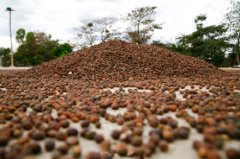
There are many ways to bake coffee beans.
There are many ways to roast coffee beans. Nowadays, most businesses use modern baking methods (hot air), which can not completely release the taste of coffee, nor can it be produced efficiently. However, professional, high-quality coffee roasters still insist on using the traditional Italian oak roasting method to bake coffee, which has a long history and can ensure the quality of coffee.

Common sense of traditional Italian oak roasting method of coffee
There are many ways to roast coffee beans. Nowadays, most businesses use modern baking methods (hot air), which can not completely release the taste of coffee, nor can it be produced efficiently. However, professional, high-quality coffee roasters still insist on using the traditional Italian oak roasting method to bake coffee, which has a long history and can ensure the quality of coffee.

Coffee roasting technology introduces the traditional Italian oak baking method
There are many ways to roast coffee beans. Nowadays, most businesses use modern baking methods (hot air), which can not completely release the taste of coffee, nor can it be produced efficiently. However, professional, high-quality coffee roasters still insist on using the traditional Italian oak roasting method to bake coffee, which has a long history and can ensure the quality of coffee.

General knowledge of coffee roasting in traditional Italian oak baking method
There are many ways to roast coffee beans. Nowadays, most businesses use modern baking methods (hot air), which can not completely release the taste of coffee, nor can it be produced efficiently. However, professional, high-quality coffee roasters still insist on using the traditional Italian oak roasting method to bake coffee, which has a long history and can ensure the quality of coffee.
Special roasting technology of coffee beans traditional Italian oak baking method
There are many ways to roast coffee beans. Nowadays, most businesses use modern baking methods (hot air), which can not completely release the taste of coffee, nor can it be produced efficiently. However, professional, high-quality coffee roasters still insist on using the traditional Italian oak roasting method to bake coffee, which has a long history and can ensure the quality of coffee.
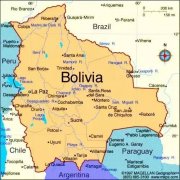
Introduction to the flavor characteristics of Java coffee in the Varic Manor of the Rodegris family in Bolivia
For more information on coffee beans, please follow the Coffee Workshop (official Wechat account cafe_style) Bolivia is one of the poorest countries in Latin America, a landlocked country bordering Brazil and Colombia. Although it is a country with great potential for coffee export, its output has been quite rare, and the conditions for growing coffee are excellent, but the challenge is also extremely difficult.

A brief introduction to the Origin, Development, History and Culture of Peruvian Fine Coffee beans with balanced Taste
Peruvian coffee has a mellow taste and proper acidity, and this lukewarm coffee attitude has made more and more people like it. Peruvian coffee has always been used as one of the stable and mellow mixed beans of comprehensive coffee Peru is located in western South America with a coastline of 2254 kilometers. The Andes runs from north to south, and the mountains account for 1% of the country's area. it belongs to the tropical desert region with a dry and warm climate.